
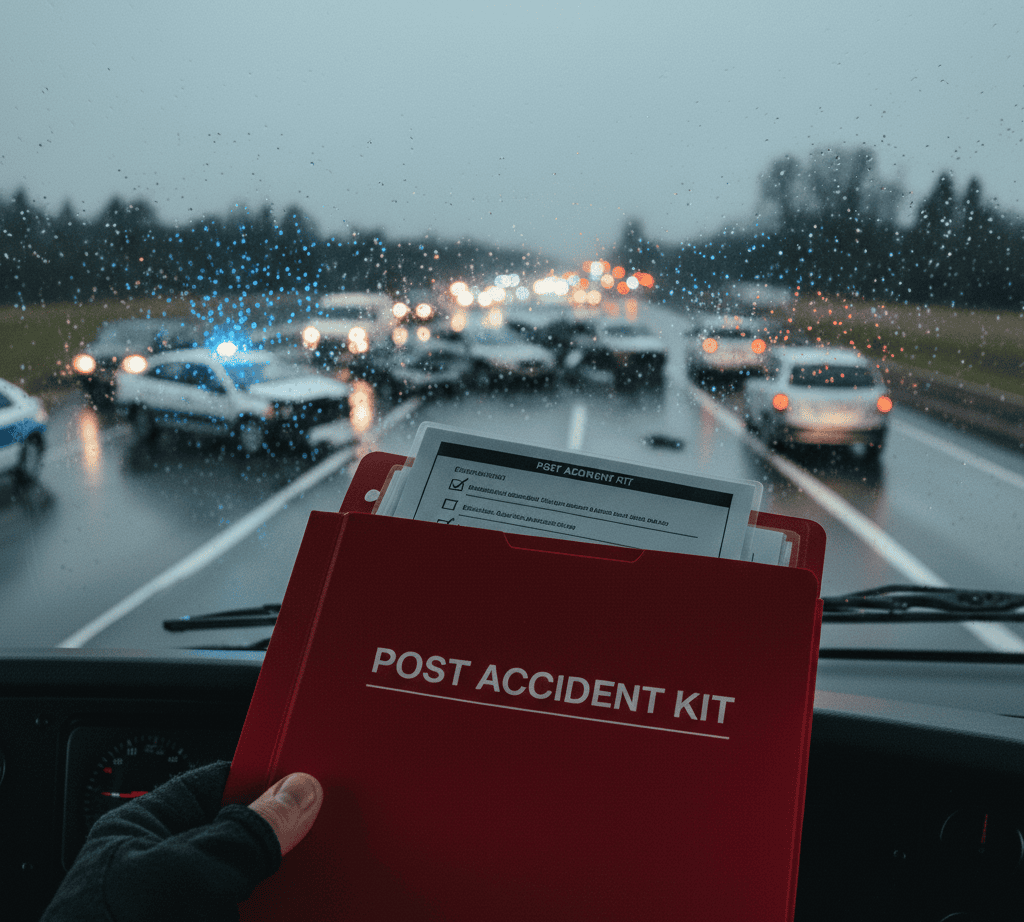
We’ve talked about preventative measures—vetting drivers, monitoring behavior, and maintaining trucks. But what happens when the absolute worst occurs?
A driver is involved in an accident. The cameras are recording, the data is logged, and the scene is chaos.
The single biggest factor that decides the ultimate cost of a major claim—and, therefore, your future insurance premiums—is how you manage the 30 minutes immediately following the incident.
A slow, disorganized, or incorrect response after an accident is like handing the plaintiff’s attorney a signed, blank check. You let evidence disappear, you let emotions run high, and you let the liability narrative set without your input.
This is Protocol 5 of the Underwriter’s Checklist: Mastering the Post-Accident Response.
1. The Pre-Loaded Accident Kit is Your Best Defense
Your driver is shaken. They are focused on safety and dealing with police and EMS. They shouldn’t have to think about what information to gather.
Every single truck must have a concise, easy-to-use Accident Kit. This isn’t just paper; it’s a step-by-step procedure:
-
Secure the Scene: Safety first. Then, activate the dash-cam’s manual recording/save feature.
-
Photo Checklist: Mandate that the driver take specific, high-value photos: license plates, vehicle positions (wide and close shots), road signs, and any skid marks. The rule: Take more photos than you think you need.
-
Witness Collection: Get names and phone numbers of every witness. Do not let them walk away. They are your most valuable, unbiased resource.
The Golden Rule to Teach Drivers: Never admit fault. Never apologize for the accident. Express concern for the injured, but do not discuss liability with anyone at the scene other than law enforcement.
2. The Absolute Must: Immediate Reporting
This is non-negotiable for insurance carriers: You must report the incident immediately.
I don’t care if it’s 2 a.m. on a Saturday.
Delayed reporting—even by a few hours—is a huge red flag for the underwriter. They assume you were trying to hide something, or worse, that you’re not taking the event seriously.
-
Report to the Fleet Manager: The driver should call the safety manager first.
-
Report to Your Agency/Adjuster: The safety manager needs to call your insurance broker or claims adjuster immediately. Getting our claims team and our outside investigators involved fast means we control the narrative and preserve evidence (like getting to the truck before the black box data is lost).
Pro Tip: Your carriers may impose penalties or even deny certain coverages if the accident is not reported within 24 hours. Don’t risk it.
3. Immediate Drug & Alcohol Testing
Following any fatal accident, or any accident involving an injury and towing, DOT regulations require post-accident drug and alcohol testing.
But the deadline is tight: eight hours for alcohol, 32 hours for drugs.
If you miss this window, the plaintiff’s attorney will argue that the driver was impaired, and you failed to comply with federal regulations. This single error can turn a defensible case into a devastating loss.
You need a clear, documented procedure with established testing clinics or mobile services mapped out along your routes. The driver must know exactly where to go.
The Bottom Line
You can’t rewind the clock on an accident, but you can control the aftermath.
The fleet that manages the post-accident scene efficiently—gathering evidence, reporting instantly, and complying with all testing requirements—is the fleet that presents the strongest defense. That discipline translates directly into lower claims costs and a better loss ratio.
A good loss ratio is the only language an underwriter speaks when it comes to offering you lower premiums.


