
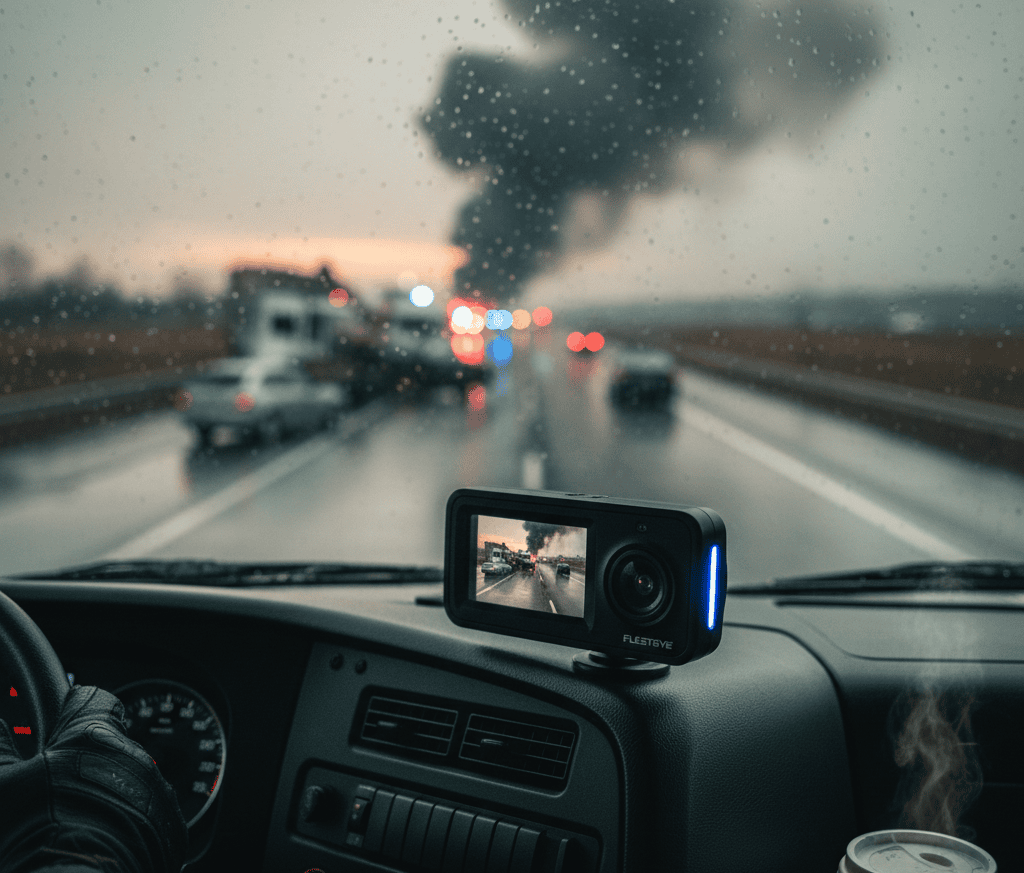
Let’s rip the band-aid off. Most truck drivers hate dash cams. They hate driver-facing cameras even more. They feel untrusted, watched, and micro-managed.
But here is the brutal reality of the insurance world today: In a courtroom, without video evidence, the truck driver is almost always guilty until proven innocent.
It’s not fair, but it is true. Public sentiment has shifted. Billboards strictly targeting “Big Truck Accidents” line the highways. Juries are primed to see trucking companies as faceless, negligent corporations. If it’s your driver’s word against a grandmother in a sedan, you are going to lose that case 9 times out of 10.
Protocol 4 of the Underwriter’s Checklist isn’t about spying on your employees. It’s about arming your business with the only unbiased witness you have: Video.
1. The Death of “He-Said, She-Said”
The fastest way to blow up your loss ratio (and your future premiums) is a long, drawn-out liability dispute.
Imagine a car cuts across three lanes and clips your bumper, sending them into a spin.
-
Without Video: The police report says “conflicting statements.” The other driver claims your truck drifted into their lane. The insurance carriers fight for two years. Legal fees pile up. You eventually settle for $150,000 just to make it go away. That loss sits on your record for five years.
-
With Video: You pull the clip. It clearly shows the car cutting you off. You send the file to the adjuster. The claim is denied. You pay $0.
Underwriters love video because it closes claims fast. It stops fraudulent claims dead in their tracks. If you don’t have cameras, you are fighting with one hand tied behind your back.
2. The Uncomfortable Truth About Driver-Facing Cameras
This is the hardest sell to your team, but it is the biggest win for your safety score.
Forward-facing cameras tell us what happened. Driver-facing cameras tell us why.
If there is a major accident, the plaintiff’s attorney is going to subpoena phone records. They are going to claim your driver was texting, eating, or falling asleep.
If you have a driver-facing camera, you can prove—definitively—that your driver was alert, eyes on the road, and doing everything right. That footage can save a driver’s career and save your company millions.
Yes, it’s a culture shift. But the best fleets frame it this way: “This camera isn’t here to get you in trouble. It’s here to prove you did your job when the world tries to blame you.”
3. ADAS: Stopping the Crash Before the Camera Records It
While cameras record the mess, ADAS (Advanced Driver-Assistance Systems) prevents it.
We are talking about Automatic Emergency Braking (AEB), Lane Departure Warning, and Blind Spot Detection.
Underwriters are aggressively pricing favor towards fleets that invest in newer equipment with these systems. Why? Because they reduce the frequency of rear-end collisions—the most common and costly type of claim.
If you are running older trucks without these systems, you are naturally a higher risk. If you are upgrading your fleet, make sure you are shouting about these safety features to your broker. Don’t just list the VINs; tell us, “These units have collision mitigation.” That is a discount lever we need to pull.
The Bottom Line
Cameras and sensors are expensive to install. I know that. But one nuclear verdict—one lawsuit that goes the wrong way because you couldn’t prove your innocence—costs more than fitting your entire fleet with top-of-the-line video telematics ten times over.
It is the cheapest insurance policy you can buy.
Are you getting full credit from your insurance carrier for the safety technology you’ve already installed? Let’s review your policy and make sure.


